Autumn Leaves Tai Chi is a coaching service for a daily Tai chi practice that supports well-being by strengthening body, mind and spirit with slow, smooth movements. The service is focused on coaching for well-being and enlivening of our life through daily practice.
It Started with the Dancers
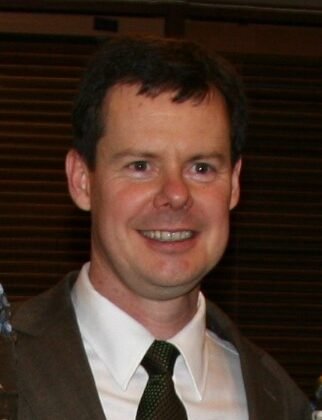
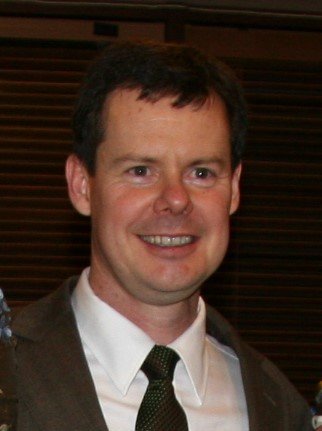
Hi I’m Michael Guidera and I coach one student at a time, on Zoom from Perth, to women across Australia. My first encounter with Tai chi happened around 1987 as my interest in Zen and meditation started to develop. At some point I bought a book about Yoga and another about Tai chi, then made a thorough study of them. The Yoga and Zen books helped me with meditation, but I chose Tai chi as my physical practice. Mostly because I just couldn’t come at the Chakra theory in Yoga. Nearly 40 years later the Chakra theory seems easier to grasp than the esoteric nature of Chinese alchemy that is shot through Tai chi when taught by the Chinese masters.
The next year I started learning Tai chi with a young man in Subiaco church hall. He was about 28 and none of the class was over 30. He took six weeks to instruct us in the first 3 of 108 moves. I was very lucky, this level of detailed instruction is rare now. By comparison the last class I attended in 2024 for this form, with an international organisation, ‘introduced’ the first 11 moves in the first class.
That organisation was actually the one I re-entered Tai chi during 1999, and stayed with for 15 years. After that came the Cheng Man-Ch’ing simplified Yang style form. Living in Adelaide at the time this form was not available locally. It had to be learned by studying Cheng’s many books on his form and a downloadable 9 part video course from one of his students. Around 2018 I tried learning a Sun style short form via DVD, again nothing in this whole style was available locally. It was difficult, to say the least. I also tried 4 different schools during this time without finding anything suitable. A similar situation was encountered after moving back to Perth in 2019.
Over twenty five years and three states, I have been in a lot of different classes. That first instructor is still the youngest I’ve come across. The oldest was an eighty four year old women teaching 6 different but related forms each class. she didn’t take up Tai chi until her early sixties. All of which has been a terrific learning environment to bear witness to what works and for who in Tai chi instruction.
What I Noticed in These Rooms
Being in varied classes over 20 years has meant observing these rooms for twenty years. A number of scenarios unfolded in many of them. Not the least was seeing a woman in her 50’s, often the most observant and capable student in the room, someone who practised between classes, arrived early and didn’t have any need to grand stand with verbose questions, generally receive the least attention from the instructor. Not out of malice, just a result of some people not getting it all, and more advanced students who routinely found a way to wangle the instructors attention, leaving no time for the woman who would have benefited most from a correction or suggestion, or a question.
I never saw someone like that fail to keep up. I did notice she stopped coming.
2020, and the door opens
When the halls, studios, and rec centres closed, something remarkable happened. Teachers I could never have reached – Faye Li Yip and her husband Tary, whose family has carried Sun style for three generations; Yang Jun the head of the Yang family; and Helen Liang in Liu He Ba Fa and Tai chi forms – were teaching live, online, through Zoom, posture by posture, correction by correction. I spent a year learning the Sun 38 with Faye and the next year learning the Sun 97 form with Tary. After that the Yang 26 and long-form with Yang Jun. Since then I still learn through these live classes in Tai chi and Qigong.
What I discovered was learning via Zoom is vastly better and easier than trying to learn through DVD’s, even the very best of them like Helen Liang’s Yang 24 form DVD.
Why people in their fifties
In China, Tai chi has a well-earned reputation as a practice you take up in your fifties and keep for life. Walk through any park in the morning and people from 55 to 85 will be practising their Tai chi. Your fifties are the decade where the practice pays its best dividends. In Australia this unfortunately is also the decade when your just as likely to have a full life with your career peaking, parents ageing and adult children launching. So fitting into a class timetable can be an early obstacle in finding the time to learn Tai chi.
Other people do take it up, usually under 40 or 30, or, and especially since 2020, people in their late 60’s or older. But that is a very different body to be re-regulating with Tai chi. And it has seemed to me that the most motivated participants were usually the women in their 50’s who applied themselves to learning but were short changed by a lack of attention to their efforts, or becoming targets for some really mindless comments.
How I teach
Every client starts the same way, and it isn’t with the sequence of a Tai chi form. First lesson begins with a discussion about your hopes for the practice, any expectations you have, and an understanding of your limitations due to past injuries, aches, the state of your knees, ankles, hips Et al. This is followed by starting on the very basics of the opening form: which Grandmasters such as Sun LuTang and Cheng Man-Ch’ing considered the most important posture in the whole set. We’ll also do a basic stepping routine.
From there it is one posture learned well enough at your own pace and adapted to your own movement restrictions, rather than learning to conform to a look of each posture regardless of what it does to your body. The form serves the client. Never the other way around. Lessons run 35 – 45 minutes depending on how much time you have: long enough to review last weeks postures, learn something new, and leave enough in the tank to do 5 – 10 minutes once or twice between lessons – which is the whole game. Like language learning, Tai chi rewards practising as often as you can for 5 – 15 minutes, rather than the heroic weekend.
My Well-being Journey
After a virus in 1993 my physical capacities dropped precipitously. Ever since, Tai chi has been a significant factor in maintaining well-being, physical function and enjoyment of nature and life. For much of my Tai chi journey the focus was only on the Yang style long-form. Despite the challenges it presented to my physical limitations the experience of the physical grace when performing the set was a constant source of joy. Then in 2015 I took to simplified forms. It seems very likely that it was not a coincidence that the biggest leap forward in my well-being in the last three decades, occurred within 12 months of changing to a sole focus on short-forms. That leap forward enabled me to stop taking the medications used by the medical profession to manage my condition for twenty years: healing it not being an option. I’m now ten years medication free.